Championship Moments from the MAC Hermann Award Ceremony
What drove Jasmine Aikey, Izzy Engle and Jordynn Dudley to have such successful seasons in 2025

Summary
- Stanford’s Jasmine Aikey won the 2025 MAC Hermann Award, capping a college soccer career marked by elite production, resilience through injury, and a transition to the NWSL.
- Finalists Izzy Engle (Notre Dame) and Jordynn Dudley (Florida State) highlighted the value of college soccer, using the NCAA pathway to develop into complete, team-first players.
- The MAC Hermann Award ceremony underscored how college soccer develops future pros, emphasizing leadership, adversity, education, and impact beyond goals and assists.
The biggest names in college soccer gather at the Missouri Athletic Club (MAC) for the presentation of the MAC Hermann award. Though Jasmine Aikey, Jordynn Dudley, and Izzy Engle were all nominated for their body of work in the 2025 season, the journey to being a finalist started well before college. To get to St. Louis, Missouri and the awards ceremony, the best players in college soccer had to fall in love with the sport, choose the college development pathway, and have the intangibles to stand apart on the field.
The Winner
Ultimately, Stanford’s Jasmine Aikey took home the award. Aikey winning might have seemed inevitable, but it wasn’t always a given that she would find soccer.
“My dad initially missed the sign up for the first year of Rec soccer. So I started a year late,” says Aikey, beaming, [...] I just loved running around chasing after the ball’
As Aikey got older, she started taking training more seriously, with a National Team training camp at the age of 12 being her turning point .
“Okay, this is pretty serious. This is what I want to do and I can.” recounts Aikey “ That national team [camp] actually led to the decision for me to be homeschooled. I was missing a lot of school; that was a big turning point of taking it very seriously.”
Those decisions helped Aikey find her way to Stanford where, dealing with a broken ankle in her junior season, she chose to reaffirm her commitment to soccer.
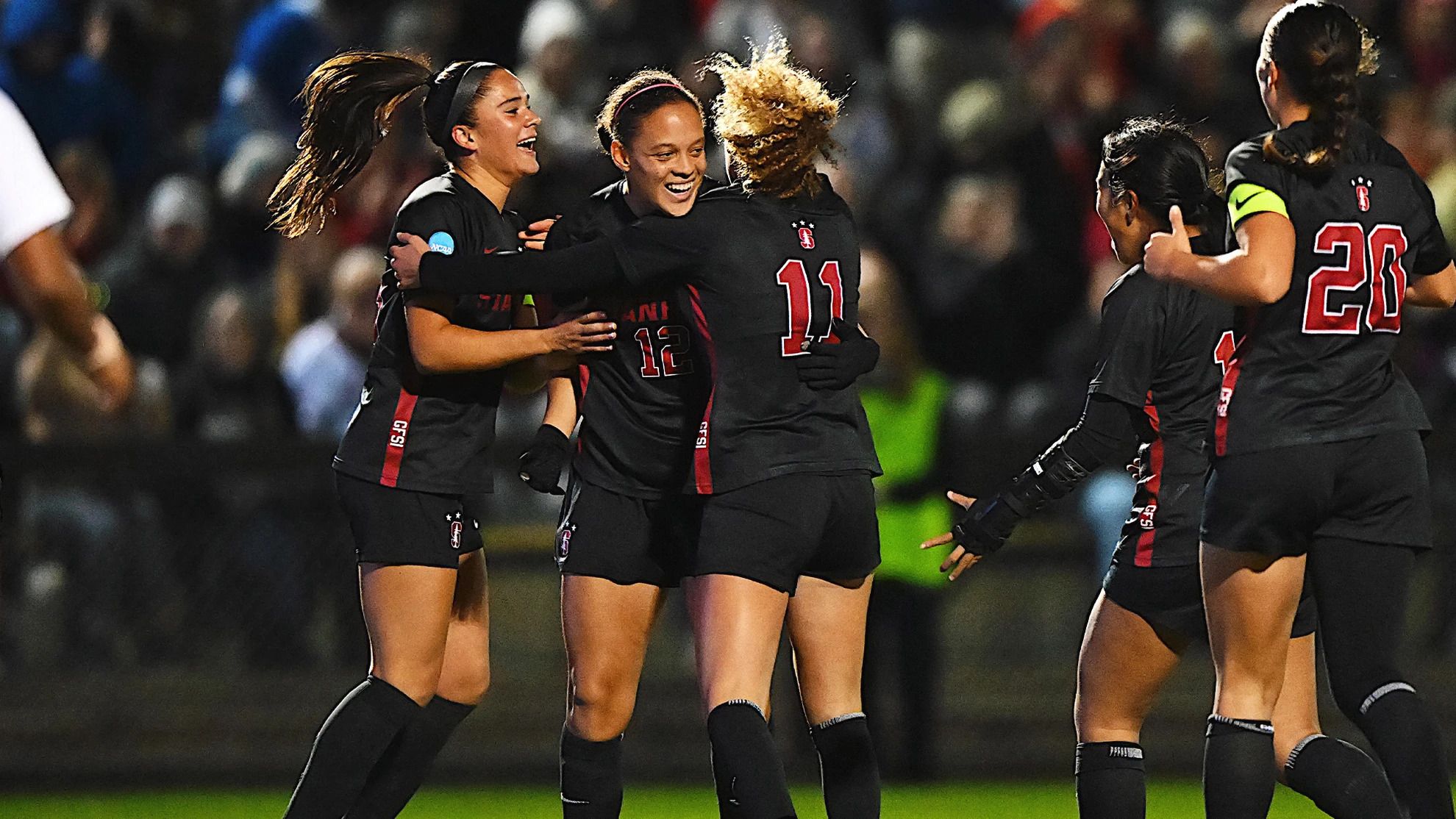
“The rehab for that was really mentally challenging, more than physically,” she admitted. Aikey considered whether she should “commit fully” to returning to play or “take the Stanford degree I got and run with that.”
That evaluation of her next steps and affirmation of her commitment to soccer during her ankle rehab is what Aikey looks to as pushing her to reach this moment: a MAC Finalist, a recent signee with the NWSL’s Denver Summit team, and, later in the night, the Hermann award winner.
Of course, Aikey’s 21 goals and 11 assists in 25 games aided her Hermann nomination. But, Aikey also posits her creativity as an underrated aspect of her game. She takes a deep breath as she thinks about the aspects of her game that don’t appear on the stats sheet. “The reason that I can do some of the skills that I do is because I’ve spent so much time working on little skills and shots with my dad.”
She smiles talking about her dad and the “probably 10,000 hours” the two have spent practicing “little skills and touches” in their backyard. Aikey’s dad retired to homeschool and train her and is, to date, her longest training partner. She does admit with a laugh that occasionally those hours and skills show up in the stats sheet.
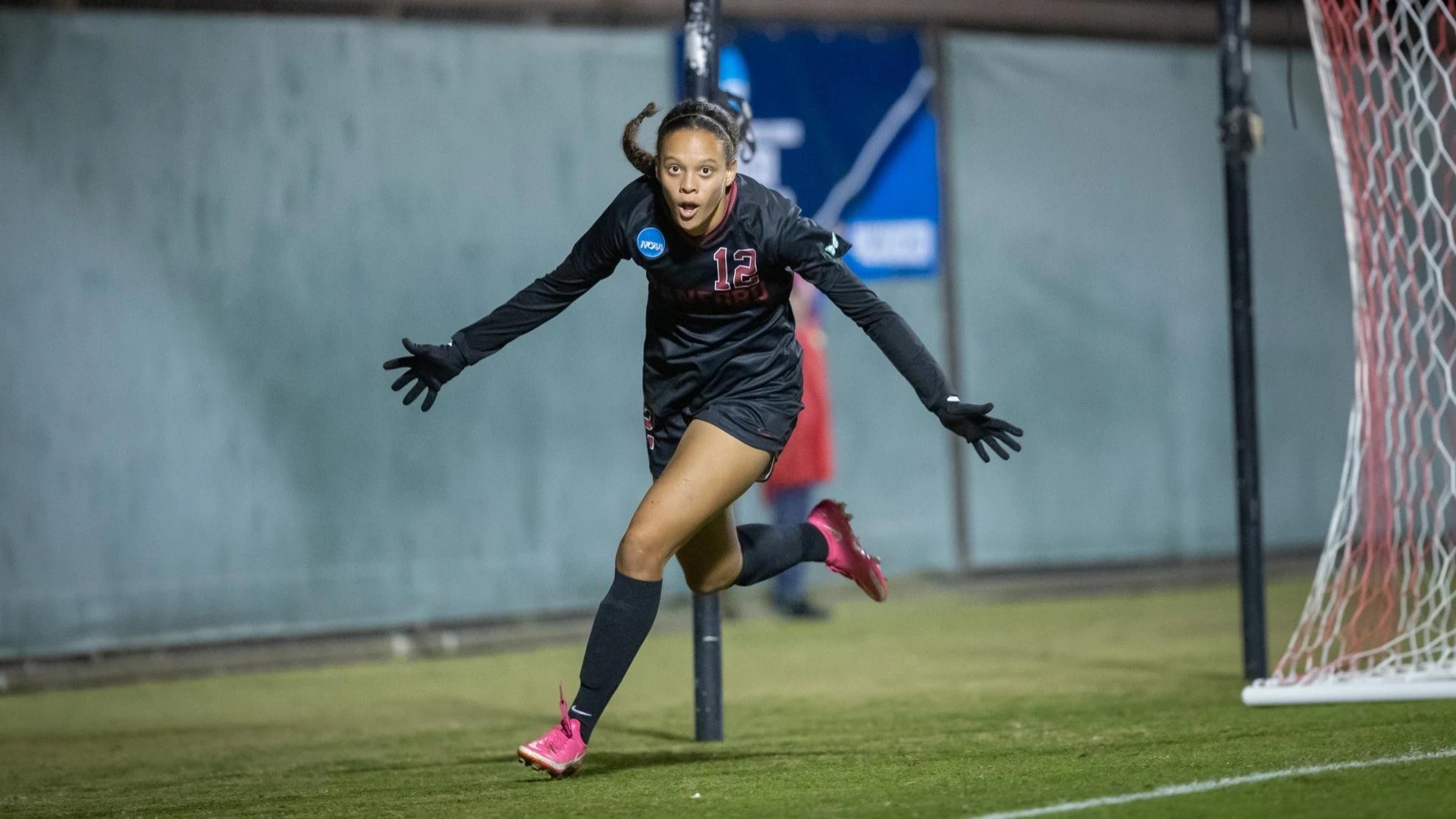
And, in an era where women’s soccer players have options to sign professionally before college, Aikey has a lot to say on the benefits of playing in a college environment before going pro.
“My mom was an immigrant and the first one in her family to go to college in the U.S.” Her mom saw the benefit of a college education, “especially from Stanford.” Aikey points out that “you never know how long soccer is going to last, I know that really well, you can get injured at any moment.” College provides another option and a chance to be with your friends and “people your age.”
The college experience isn’t just about the soccer environment or a degree either. When asked for a favorite memory, Aikey lights up talking about team bonfires with s’mores. “I love those nights.”
The Young Gun
Engle, like Aikey, sees benefits to choosing the college soccer route. “College soccer is very competitive, there is, obviously, the pro environment. There’s a level of development and maturity" that happens on and off the field in college, alongside your peers instead of trying to figure life out alongside those who have already made the pro jump.
And while players for professional teams represent something bigger than themselves, Engle focuses on how playing for Notre Dame, or any college team, gives athletes a chance to represent their soccer and legacy
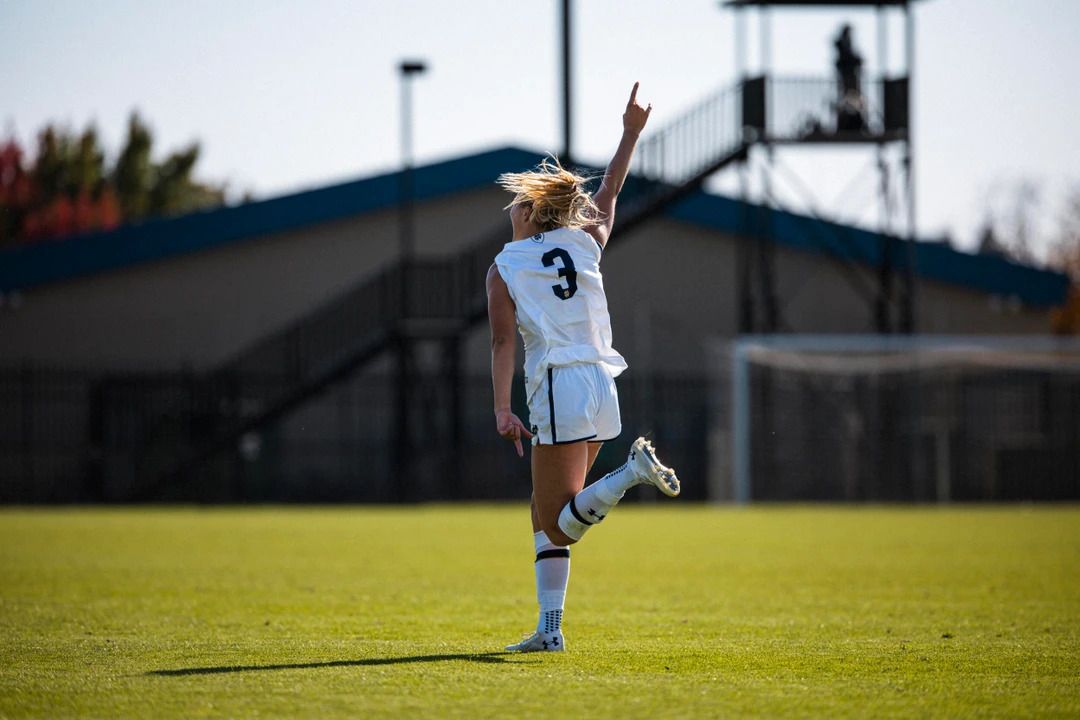
“It’s an easier way to learn how to live on your own,” Engle adds. The Notre Dame forward credits college with giving her some of her best memories and also teaching her just how busy life could be. Freshman Izzy was “always doing something, always being productive” Engle laughs, reflecting on how the college pathway specifically impacted her.
While parts of college were a surprise, the soccer part was not. Growing up, Engle played soccer and swam competitively. She laughs, “My last year swimming, I hated it.” She’s quick to point out that that’s not a knock on swimmers, she just “knew, every [soccer] practice I went to, I just had so much fun.” Soccer gave Engle “joy” from all aspects: the game, being competitive, having teammates to make her better.
Engle made goals and wrote them down: play college soccer, play professionally, make the national team. Writing out those goals helped her to realize “I needed to drop swimming.” Although Engle didn’t write down “win the MAC Hermann award,” she sees her nomination as the first step.
As the youngest player nominated on the women’s side, Engle is grateful that so far in her career she hasn’t had to fight through a major injury. Her freshman year ACC goal slump is the adversity moment she highlights.
“It was mentally challenging,” Engle admits, “when you’re a forward and you’re the one who’s supposed to score the goals and you aren’t, you feel like you aren’t doing your job.” Freshman Engle was looking around, trying to figure out how she was going to score and contribute to her team. As her ACC goal continued to elude her, Engle continued to feel the pressure.
Midway through her goal drought, she called her brother, who told her “the best is yet to come.” That message stuck with Engle, allowing her to “play with freedom.” Her club coach helped as well, telling her that “scoring goals is what you do,” and a drought didn’t change that fact. Both pieces of advice helped Engle to reframe her mindset and focus on other ways to contribute to the team.
Engle laughs, “the one game I was like ‘I don’t need to score today,’ that was the game I scored.”
It’s a mindset shift that Engle has carried into this year, allowing her to play with freedom knowing “my value comes from other places, other ways.”
Knowing Engle’s philosophy about goalscoring, perhaps it’s no surprise that she sees her defensive work rate as what sets her apart off the stat sheet. “I love working my butt off and running at defenders, making them make a decision, running with intention.”
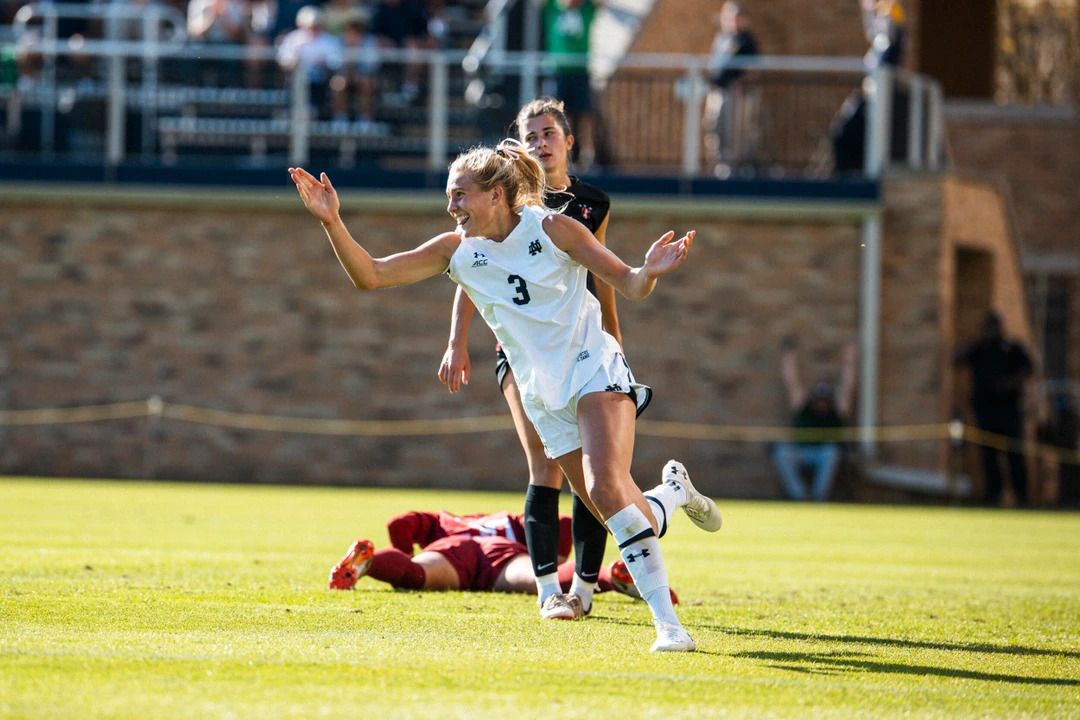
She’s passionate about how hard she works to start the press and takes pride in her defensive work. “I love putting in that gritty work, making a slide tackle in their half,” Engle asserts. She sees defensive work as necessary to being a well-rounded player and takes pride in her efforts.
And she would love to see turnovers caused appear on the NCAA box scores. “Is that a basketball stat? Honestly sure!” Engle laughs, quick to point out that it would help the midfielders get more credit. “My teammates are so good and I would be nowhere without them, I want to be able to give them more credit.”
She laughs, “turnovers caused, let’s do that.”
The Champion
Like Engle, Jordynn Dudley would love to see forced turnovers show up on the stats sheet for forwards.
Having grown up playing both soccer and basketball, Dudley loves the idea especially because as a forward, “not scoring is not the best part of soccer.” She too has had to find ways to “lift up her teammates,” and not be reliant on goal stats for her confidence.
There is a world in which Dudley ended up playing basketball full time instead of soccer. Dudley admits that while “I always loved playing it [soccer], I didn’t really think about it being a long term thing maybe until sophomore year of high school.” Soccer won out over basketball in part because “I could see myself playing soccer long term and not really basketball.”
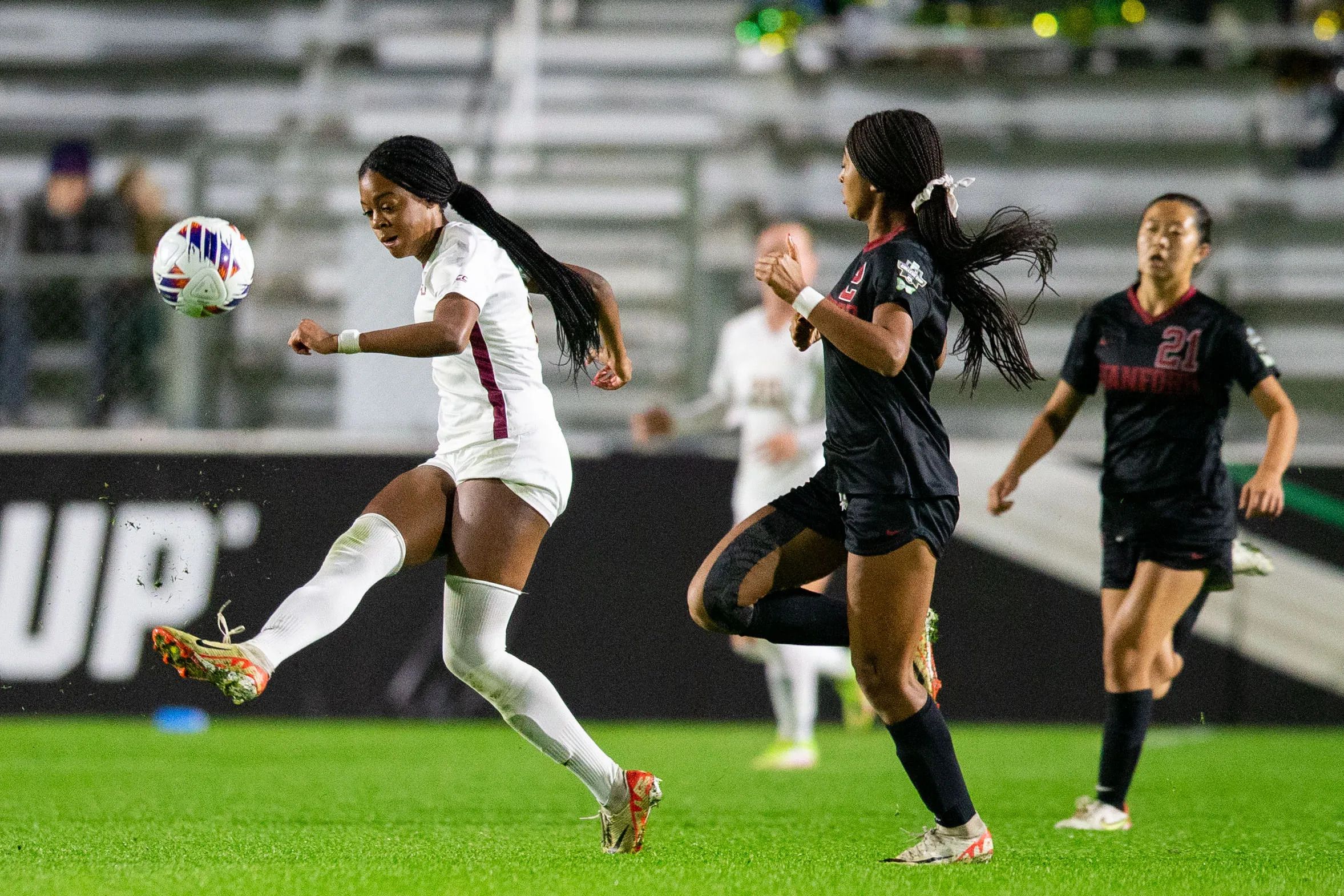
Not that it’s been a perfect journey or an easy high school decision. Dudley takes a second to think about all the moments of sacrifice and adversity that led her to being an MAC Hermann award finalist.
“High school, that’s when I decided I wanted to do it long term,” Dudley states. Once she made that decision, she had to make the tough choices about what she would miss in order to prioritize soccer. All those sacrifices made it possible for Dudley to play college soccer at Florida St. and eventually become a two-time NCAA Champion.
But winning national championships isn’t why Dudley loves the college soccer path. “There’s so much growth, on the field, off the field,” she adds. The connections in college, “meeting people,” increased maturity, “learning how to be by yourself,” are all reasons Dudley believes college is important as a pathway to the pro ranks.
On a personal note, Dudley mentions that she’s had moments where she’s lost confidence as a soccer player. College and her team have helped her navigate those moments. “That’s hard to do when you skip a whole section of your life where you have to go through a lot of difficult moments.”
And, Dudley admits with a laugh, “I could not cook before I went to college.” Her best meal at the moment is steak, potatoes, and “maybe some broccoli.” Her teammates would probably say a pasta dish, showcasing just how far Dudley has come in the cooking department.
College has also helped to grow her leadership skills, which are what Dudley thinks makes her the player that she is. “I’ve grown as a leader for my team,” she settles on, “I kinda got pushed into that role.” Dudley acknowledges that people probably didn’t expect that from her after her freshman year but she’s grown more comfortable leading by example.
Dudley defines leadership as “picking up your teammates when they need it but also, expecting the most from them.” That combination of “lifting each other up” while pushing each other to perform is what catapulted Florida St. to the national championship during the tough moments of the season.
“I’m not a very talkative person,” Dudley admits, “it was really hard, my coaches pushed me a lot to get to that stage of my life.” Finding her voice and leading by example, even when not scoring, is part of the reason Dudley was a MAC Hermann Finalist. Of course, her 11 goals and 14 assists help, too.