Singles Tennis, A Team Effort
Inside Noelle Farber's first ITA experience


- 5wins contributor Noelle Farber, who also plays Division III tennis for NYU, takes us inside the experience of playing in a weekend tournament as a student-athlete.
- Farber details the importance of a supportive team to withstand the mental and physical challenges of playing over 10 hours of tennis in two days.
- This northeast regional championship featured teams from NYU, Skidmore, Hamilton, Vassar, Rochester, and Ithaca.
The Day we Arrived
As I walked onto the court, I was ready to show I had what it took to win.
Less than 24 hours earlier, I traveled to Saratoga Springs, welcomed by its old-town charm and the smell of freshly cut grass, for my first ITA experience. I was not in the draw. I had traveled as an alternate, hoping for a chance to prove myself in front of my new coach and teammates. An alternate can only enter the draw if another player resigns from the tournament.
The Intercollegiate Tennis Association (ITA) oversees collegiate tennis across all NCAA divisions. It organizes regional and national championships for student-athletes across the country. Competing for NYU in an NCAA Division III regional championship, I was part of a field that brought together players from universities throughout the Northeast, including Skidmore, Hamilton, Vassar, Rochester, and Ithaca. It was an opportunity to compete against the strongest players in the region
The First Round
As luck would have it, a spot opened up, and I was in the tournament. I deliberately avoided looking at the draw. I didn't want to know who I was up against or what their ranking was. I wanted to play my game and figure everything else out later.
The first few games went exactly how I needed them to. 1–0. 2–0. 3–0. As my shots were landing and the games were falling my way, I could feel myself settling into the match
My shoulders started to loosen, my feet moved, my strokes found their targets. The ball seemed to be landing exactly where I wanted it to. I was finding my rhythm. Before 10:30 am, I had secured my first win.
It was a straightforward victory, but it gave me the confidence that I belonged and could compete at this level.
The Second Round
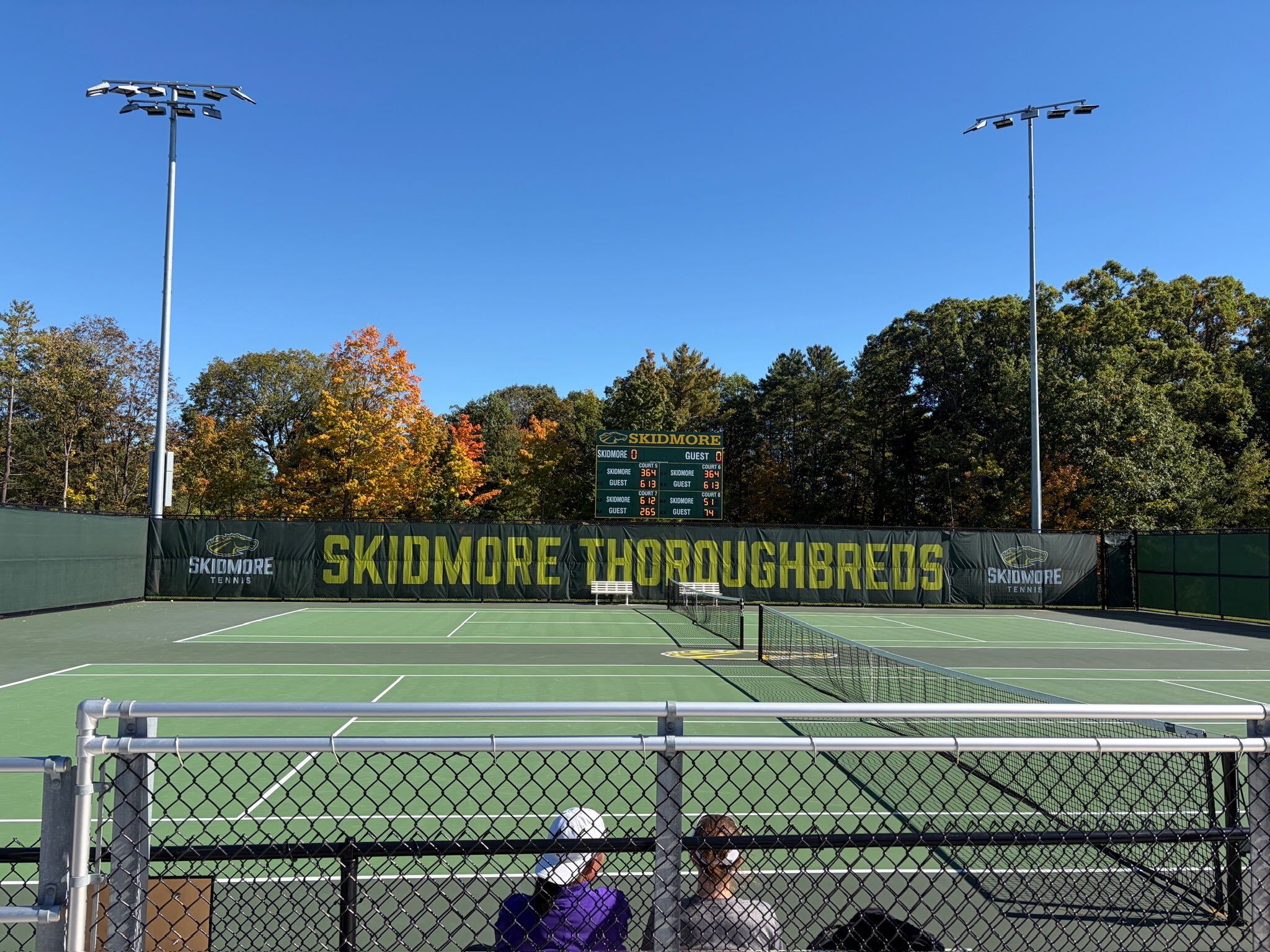
In between matches, I cheered on my teammates and refueled my body. I can’t even remember how many bananas and electrolyte packets I consumed throughout the weekend. Before I knew it, my name was called on the microphone for the second round: “Noelle Faber NYU. Noelle Faber NYU. Please report to the tournament desk.”
This time, I knew what I was walking into. A new opponent took her place opposite me with the backing of an entire team ready to cheer her on.
The atmosphere was different from the first match. Every shout from the opposing team's bench found its way into my head. My strokes tightened, my shots landed shorter, and instead of attacking, I was feeding balls into the middle of the court for my opponent to put away. I was letting her dictate the points, and practically handing her the match.
I was down 4 games to 1 in the first set. I didn’tt feel my opponent was playing better than me, I was just making it easy for her.
You're better than this, Noelle. I looked up at the stands and saw a sea of purple shirts. My teammates willed me on.
They chanted, "LET'S GO NOELLE! FIRE ME UP!"
Something shifted. I stopped worrying about the outcome and focused on winning the next point. With my teammates echoing in the background, I wasn't alone on that court. My teammates were right there, believing in me and motivating me to compete.
One point at a time, I started to find my game again. I stopped worrying about who was watching and focused on what was in front of me. I clawed my way back into the match up to 4-4 with an important deuce point on the line.
The rally that followed seemed to last forever. Thirty balls of waiting for the right opportunity. Then she sent back a ball that sat up just enough. I moved forward and attacked, hitting a winner down the line. Originally down 4-1, I was now serving for the set at 5–4.
I don't remember much of what happened after that. I stopped worrying about the score and started trusting my instincts. The crowd faded into the background, and I focused only on winning the next point. When it was over, I had won in two sets, 7–5, 6–3.
Two matches down. I was onto day 2.
The Night of Day 1
By the end of the first day, I had started to understand this tournament was about more than the matches themselves.
College tennis is a delicate balance. You compete individually, but are never entirely on your own. You play your own points, deal with your own nerves, and are responsible for your own results. Yet, when you look up between points, your teammates are there. They celebrate every winner and feel every missed shot alongside you.
As competitors were eliminated, the crowds grew and our team got louder. Emma Kast, my teammate, describes it best.
“You don’t realize the difference it makes when your teammates are consistently there to cheer you on,” Kast says. “It can turn a loss into a win.”
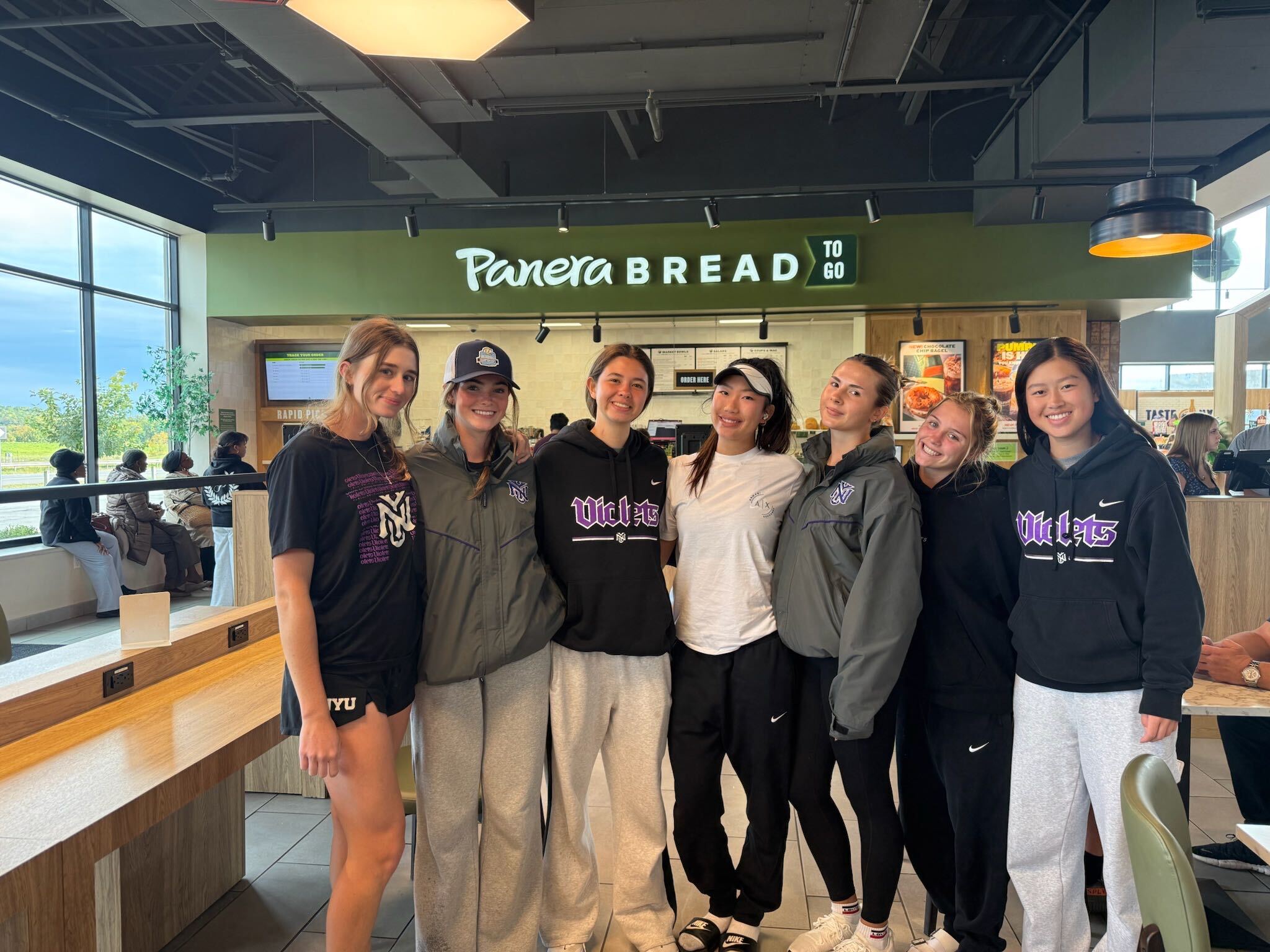
Beyond supporting each other on the court, the downtime in a trip like this is a great opportunity for team bonding. That night we all ordered food and sat in our hotel lobby, eating and chatting about the day. We shared our frustrations about things that didn’t go our way, but also laughed at moments on and off the court.
I especially loved hearing my teammates cheer, "Noelle takes no Ls!" It became a go-to cheer that never failed to make me smile on court. Talking together gave us a chance to unwind and reflect on our long day of matches.
The Third Round
Day two, and only 16 players remained. I walked onto the court and looked at the court next to me, grateful to see my teammate walking on as well. We exchanged a knowing look, both hoping to move forward. I recognized my opponent. The previous day she had beaten a player I had lost to over the summer.
I tried not to dwell on the challenge she was sure to pose. I started slowly, but I kept pace. 1–2. 2–3. 3–4. Not bad, Noelle. Keep going.
I fed off the energy coming from the neighboring court. My teammate was playing well, and seeing her compete helped me to raise my level. I wanted us both to get through. I kept telling myself to stay aggressive, trust my shots, and attack when the opportunity came. Eventually, I found myself up at 6–5, with two set points. I couldn't convert either. Nerves crept in, and I lost the tiebreak.
Losing that first set was frustrating. I had fought for every game and came within two points of taking the lead. To let it slip away in a tiebreak was exhausting, both physically and mentally. I had to fight the urge to dwell on those missed opportunities and remind myself that the match wasn't over. I still had another set to play.
I knew I could still turn the match around. My teammate had just won her match in the time it took me to lose the first set of mine. I was desperate to join her in the quarterfinals. I started the second set well, going up 1–0, then 2–1. But something was happening on the other side of the net. My opponent kept reaching for her knee.I could see tears rolling down her cheeks. She approached me and explained that an existing knee injury was acting up. She couldn't continue and had to retire from the match.
I immediately felt for her. We had been having a competitive match, and I knew the frustration of dedicating countless hours to your sport, only to have an injury rob you of the opportunity to do what you love. At the same time, it meant my unlikely journey was continuing, and I was through to the quarterfinals.
The Quarterfinals
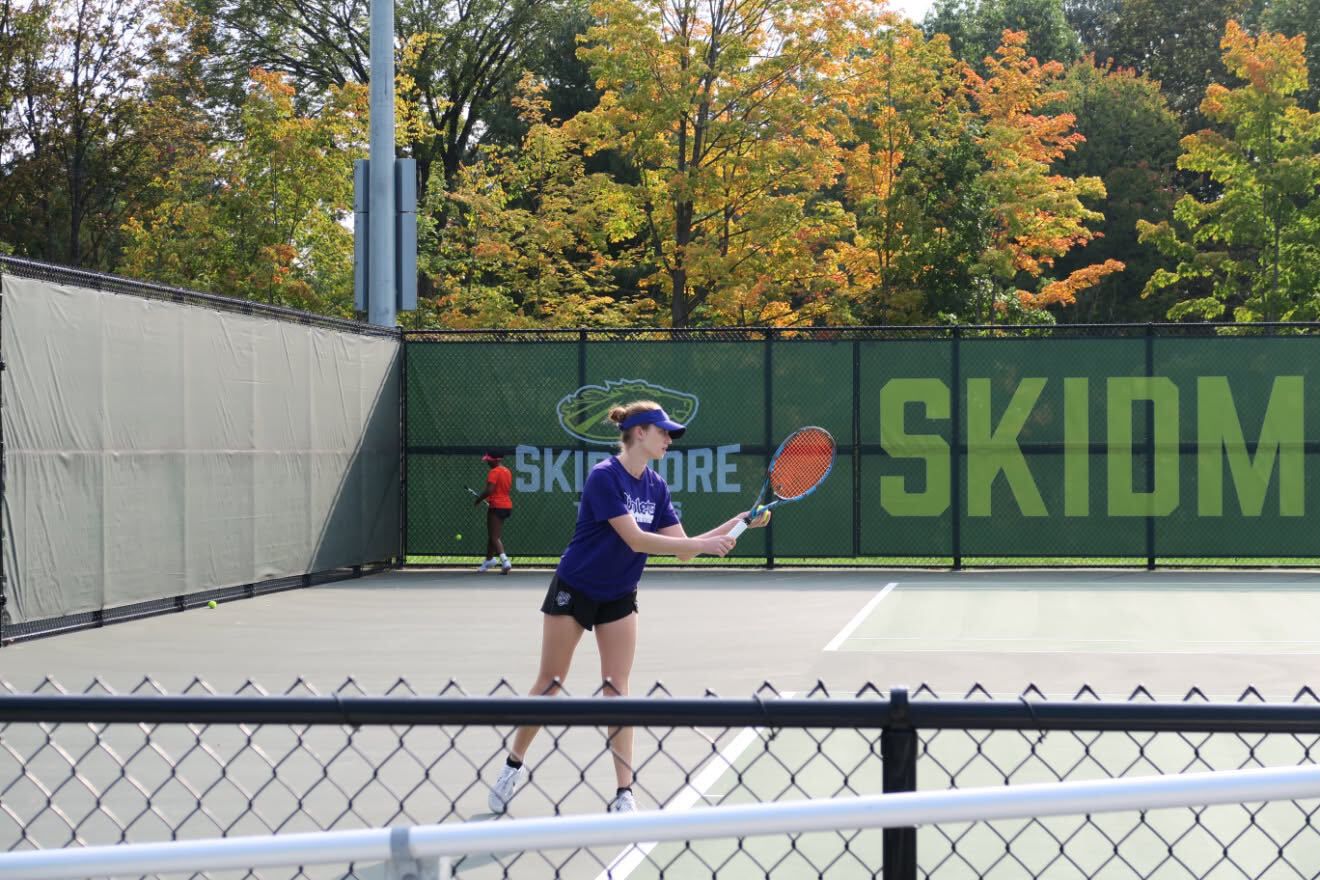
Eight players remained, and four were from NYU. It was exciting to see so many of us make it that far. By this point, I had played close to eight hours of tennis in less than two days. The momentum of my previous matches helped quell the fatigue that was building.
I stepped onto the court for the quarterfinal and immediately found my rhythm. I was hitting my spots, moving my opponent from side to side, and taking control of the rallies. The ball seemed to be finding the lines every time. 6–2. One set away from the semifinals.
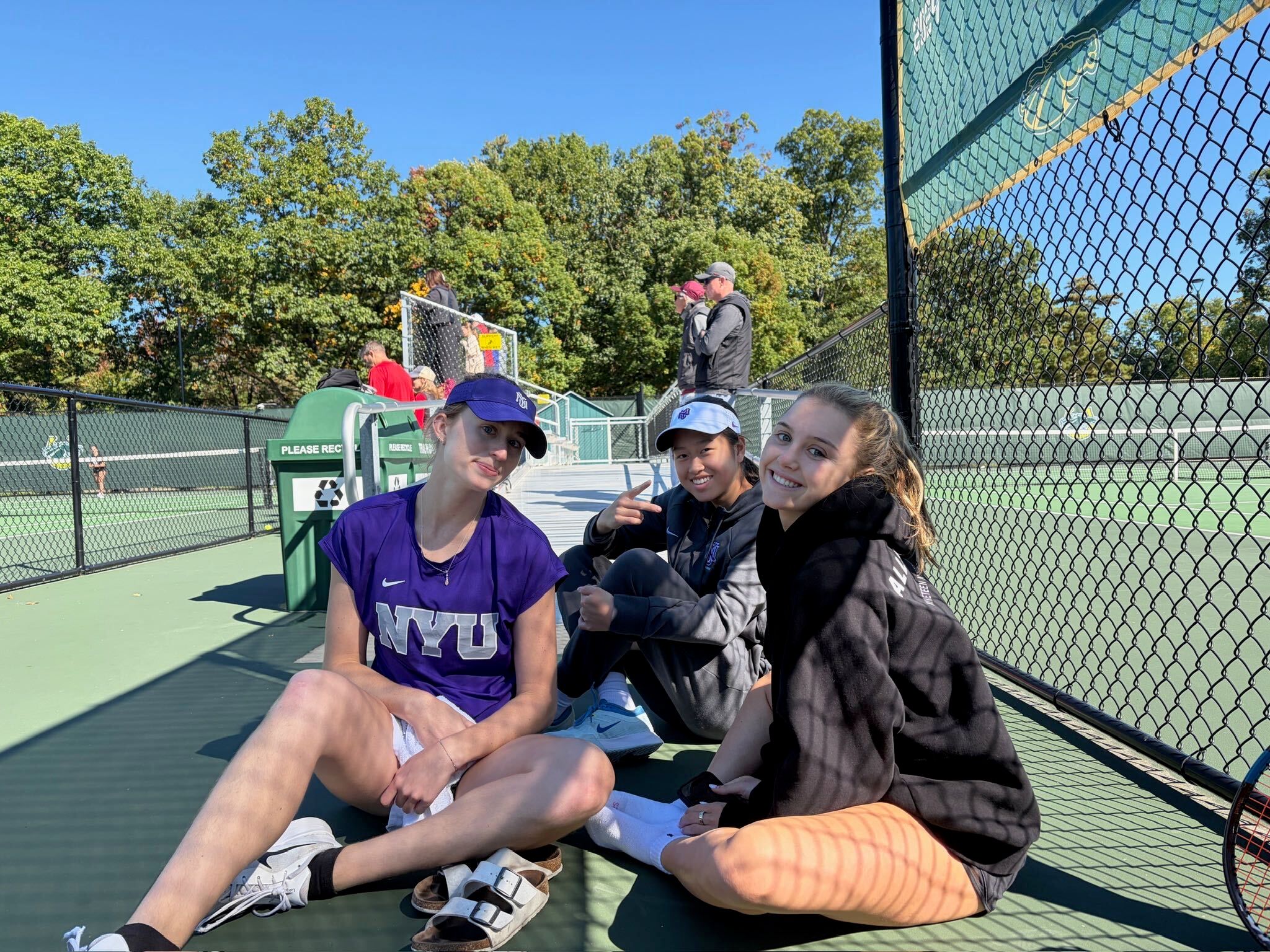
Then she took a bathroom break. I took a seat on the floor against the fence at the only shaded spot I could find. Just one more set, Noelle. I could feel fatigue creeping in, and I worried her long bathroom break would slow my momentum.
When she returned, the match was completely different. Suddenly, she was hitting lobs, high, looping balls that seemed to hang in the air forever. She was running down everything. Every. Single. Shot. My level of play didn’t drop entirely, she just adapted to it and my thoughts became more negative..
I wanted to hit through her and get back to the tennis I had been playing in the first set. But the more frustrated I became, the harder it was to execute. My legs were getting heavier, the heat was catching up with me, and the match was slipping away.
I lost the second set 6–1. I looked toward my teammates again and tried to absorb every bit of energy they were giving me. I kept fighting, but eventually, it wasn’t enough, and I lost.
I could feel myself getting emotional, but I was also exhausted. I had given everything I had. My teammates came onto the court to hug me. I was reminded that even though I was competing individually, I had never been competing alone.
Leaving Saratoga
After approximately 11 hours of tennis over two days, I had made it from alternate to quarterfinalist. I was disappointed not to make the semifinals, but proud of how I had competed and how far I had come. I spent the beginning of the tournament worrying about whether I belonged. By the end, I was focused on competing and enjoying playing tennis.
I also realized how much of a difference a supportive team makes. We may not have been the highest-ranked players in the tournament, but we certainly made ourselves heard. Having teammates who genuinely wanted to see each other succeed made the experience that much better.
Victoria Wang, my teammate who went on to reach the semifinals, captured that feeling best.
"Watching everyone compete and support each other reminded me why I love being part of this team,” Wang says. “We are all in it together."